ServicesSealants
Dental Sealants for Kids in Mansfield Center
A sealant is a thin, tooth-colored layer that covers the chewing surface of your child's back teeth. It closes up the tiny pits where food and germs hide from a toothbrush. Nothing gets numbed or drilled, and each tooth is done in a few minutes.
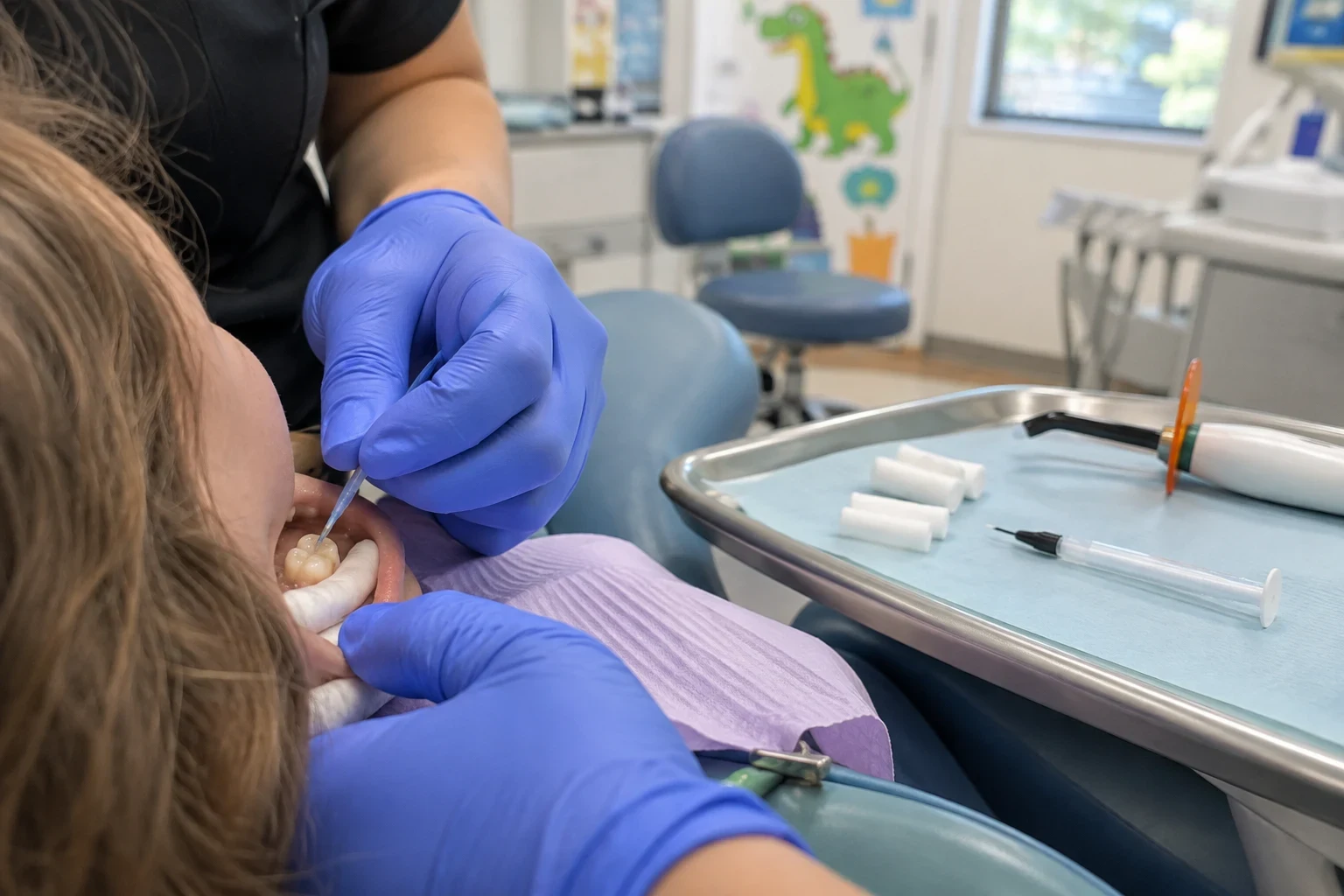
What sealants do and who they help
The chewing surfaces of back teeth are not flat. They have narrow pits and grooves, some thinner than a single toothbrush bristle. Food and plaque settle in there, and that is where most cavities in kids start. A sealant fills those grooves and leaves a smooth surface, so there is less room for germs to hide and brushing can actually reach.
We usually suggest sealants when the first permanent molars come in, around age 6, and again when the second molars show up, around age 12. Some kids with deep grooves in their baby molars benefit too. We look at your child's teeth and tell you plainly whether sealants make sense now, later or not at all. We treat it the way we'd want a neighbor's dentist to treat our own kids.
Sealants work alongside brushing, flossing and fluoride treatment. They don't replace any of them.
What a sealant visit includes
- Checking every molar
- We look each tooth over for early decay before sealing it. Covering up a cavity that is already forming would be a mistake. If we spot a soft area, we'll talk with you about a filling for that tooth.
- Clean grooves first
- We polish the chewing surface so the sealant sticks to bare enamel instead of plaque or bits of lunch.
- A dry tooth
- Spit is the top reason sealants come loose too soon. Cotton rolls and gentle suction keep each tooth dry the whole time.
- Applying and hardening
- The sealant goes on as a liquid, settles into the grooves, and sets in seconds under a small blue light. Your child can eat and drink as soon as we're done.
- Testing the bite
- Your child closes and chews a little while we watch for any high spot. If something feels off, we smooth it down before you head out.
- Follow-up at each cleaning
- Over time a sealant can thin out or chip. We check it at every exam and cleaning and patch any area that needs it.
Signs your child may be ready for sealants
Fresh molars have come in
The molars that arrive around age 6 and age 12 are the usual ones we seal. They're at their most cavity-prone in the first couple of years.
Deep lines on the chewing surface
Dark streaks or food stuck in the tops of the back teeth mean the grooves are deep enough to hold plaque.
A history of cavities
Kids who have had fillings tend to get more. Sealing the molars that are still healthy gives them extra cover.
The back teeth get skipped
Young kids and busy teens alike rush past their molars when they brush. A smooth sealed surface holds up better on those hurried nights.
Frequent snacks and sips
Juice, sports drinks and grazing all day give germs in the grooves a steady supply of sugar. Sealants leave them fewer places to settle in.
How sealant placement goes
- 1
Exam and a plan
Sealants are often placed at a regular checkup. We look at the teeth, check for early decay, and tell you which teeth we'd seal and why.
- 2
Clean and prep
We clean the tooth, then put a mild gel on the chewing surface for a short time. It roughens the enamel slightly so the sealant grips. Then we rinse and dry the tooth.
- 3
Paint and cure
We brush the sealant into the grooves and harden it with a blue light. Most kids say the hardest part is keeping their mouth open.
- 4
Check and go
We test the bite and show you which teeth were sealed. There's no numbness to wait out, so your child can head right back to school or play.
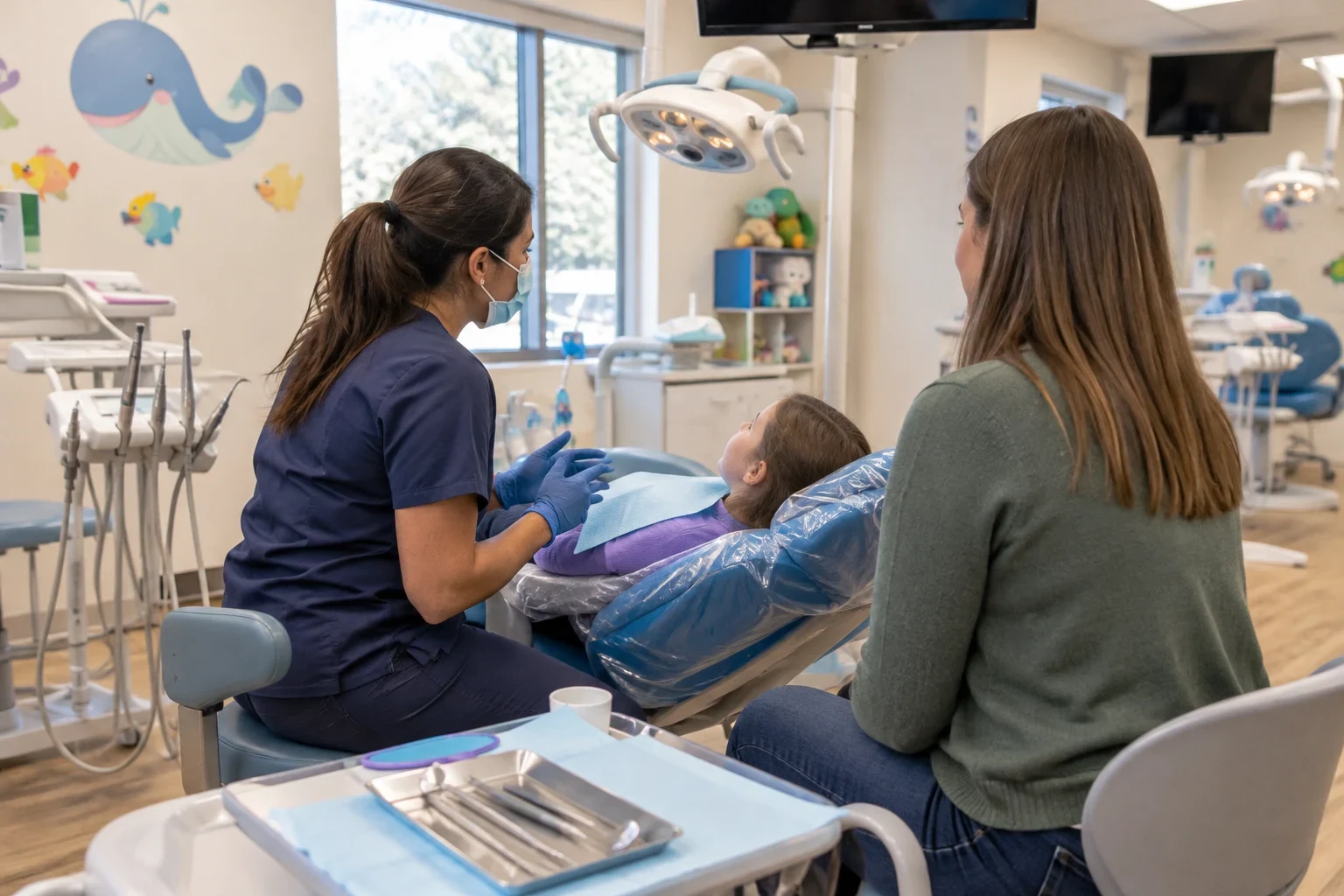
What sets the price of sealants
Of all the care we give kids, sealants are among the simplest. Your total comes down mostly to how many teeth get sealed and what your dental plan picks up. We walk you through the numbers before any work starts, so the bill holds no surprises.
- How many molars
- Kids usually have two or four molars done in one visit. Four teeth cost more than two.
- Your dental plan
- A lot of plans pay for sealants on permanent molars, though many set an age cutoff or limit how often a tooth can be redone. Baby molar coverage is less predictable. We'll help you sort out what your plan actually pays for.
- Early decay we find
- A tooth with a soft spot may need a filling rather than a sealant, and that is priced differently. You hear about it from us before anything is done.
- Redoing a worn sealant
- Topping up a chipped or thin sealant down the road is a quick job. Whether your plan pays for it depends on the plan.
- Paying for the visit
- Use most insurance plans, pay by MasterCard, Visa or Discover, or spread the cost out with the CareCredit Patient Payment Plan.
Questions parents ask about sealants
Something not covered here? (508) 501-8542
Will my child feel any pain?
Not really. Nothing gets numbed and nothing gets drilled. The gel we use to prep the tooth has a slightly sour taste, and a few kids get fussy about the cotton rolls. Most children get through it just fine.
How many years will sealants hold up?
Often several years, though they don't last a lifetime. Everyday chewing wears them thin, and crunching ice or hard candy can crack off a piece. We look them over at every cleaning and redo any spot that's worn.
Is the BPA in sealants something to worry about?
Plenty of parents ask, and it's a reasonable thing to ask. Research shows the amount from a sealant is tiny, smaller than what most of us get from ordinary daily sources. Bring your questions to the visit and we'll talk it over before you make a choice.
Do baby teeth ever get sealed?
In some cases, yes. Baby molars with deep grooves, or a child who has already had cavities, can be good reasons to seal them. When we don't see a real benefit, we'll tell you straight.
Is eating okay once we leave?
It is. The sealant has fully set before your child gets out of the chair. We'd hold off on very hard or sticky candy for the rest of the day, mostly so the bite feels normal.
Protect your child's new molars
Families come to us from Mansfield, Easton, Norton and nearby towns. Give us a ring and we'll set up a sealant visit or add it to your child's next cleaning. New patients can register on the same call.