ServicesRoot Canals
Root Canals for Kids in Mansfield Center
When a cavity or a bump to the mouth reaches the soft center of a tooth, it can hurt and get infected. We clean out the damaged part, seal the tooth and help your child keep it. We go slow, explain everything and keep kids comfortable.
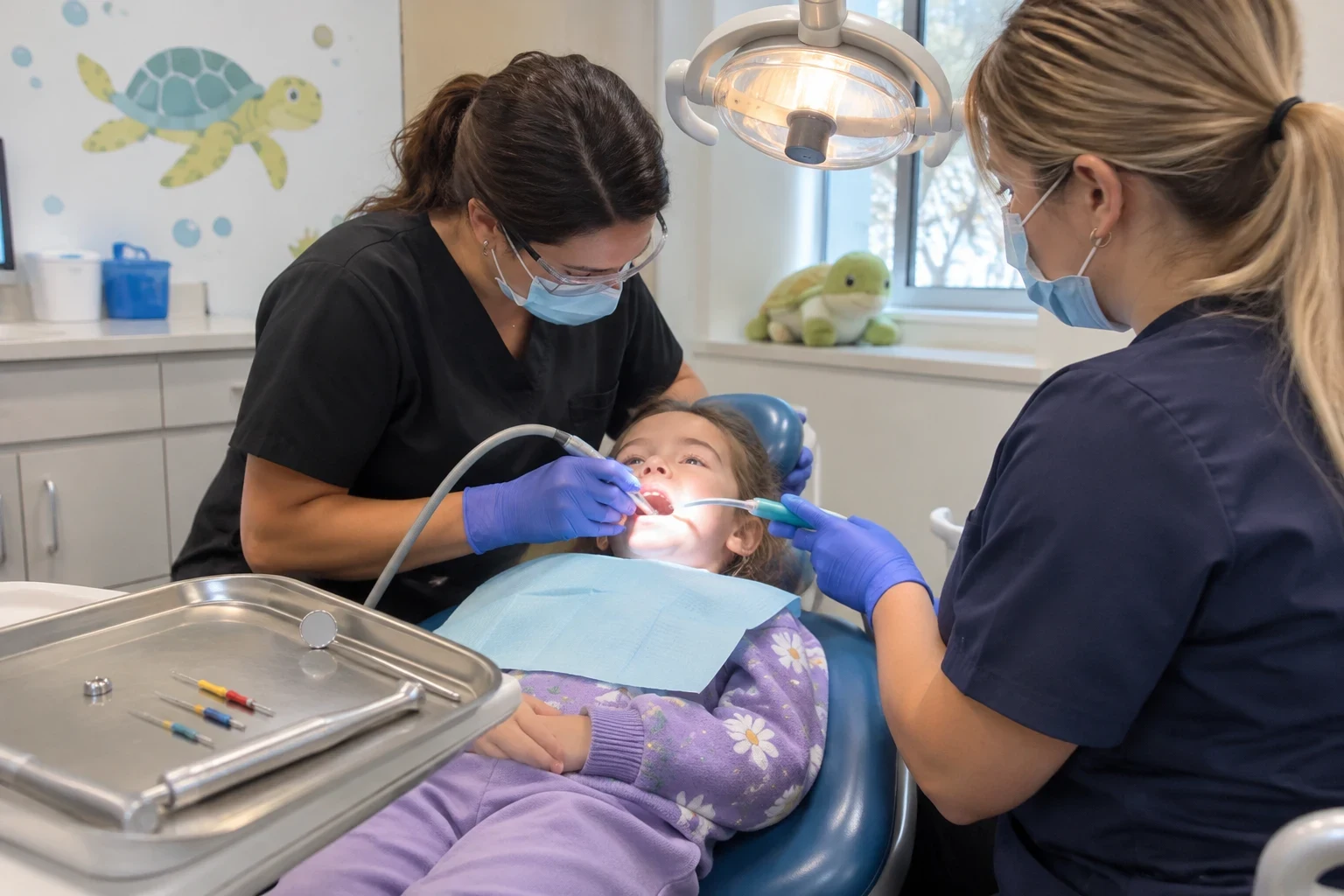
What a Root Canal Means for a Child
Inside every tooth is a soft core called the pulp. It carries the nerve and the blood supply. Deep decay or a hard knock can leave that core inflamed or infected. A root canal treats the inside of the tooth so it can stay put.
On baby teeth, the job is usually smaller than parents picture. Often we treat only the top part of the pulp, which is called a pulpotomy. When infection reaches further down, we clean out all of the pulp, called a pulpectomy. A teen with an infected permanent tooth may need the same complete treatment a grown-up would get.
When saving the tooth is the better choice for your child, we'd rather save it than pull it. When it isn't, we'll tell you straight and talk through extractions and the next steps.
What the Treatment Includes
- A careful look first
- We check the tooth, the gums around it and take x-rays to see how deep the problem goes. You see the images too.
- Numbing done gently
- We use a numbing gel before any shot. We talk kids through it in simple words and take breaks when they need one.
- Cleaning out the damaged pulp
- We remove the inflamed or infected tissue and clean the space inside the tooth. A baby tooth gets a filling material that is made to dissolve as the tooth gets ready to fall out.
- Sealing and protecting the tooth
- Most treated baby molars get a crown so they do not crack. You can read more on our pediatric crowns page.
- Calm options for nervous kids
- Some kids do fine awake. Others do better with help relaxing. We explain the choices on our sedation dentistry page and decide together.
- Clear after-care steps
- Before you leave, we tell you what to expect that night, what your child can eat and when to call us.
When Tooth Trouble Has Reached the Nerve
Aching that won't quit
A short zing that fades fast is common. An ache that hangs on for minutes, or returns again and again, often points to the nerve.
Waking up hurting
If your child wakes at night from a sore tooth, or it aches for no clear reason, book a visit soon.
A small pimple on the gum
A little bump or swollen spot on the gum beside a tooth is often an infection at the root draining out. It may not hurt your child at all, but it still needs a look.
Hot and cold linger
When a cold drink or a bowl of warm soup keeps hurting well after it is swallowed, the inside of the tooth may be inflamed.
Gray or darkening tooth
A front tooth that slowly goes gray after a fall or a knock may have a hurt pulp inside.
Found during a routine visit
Some deep cavities cause no pain. That is one reason regular exams and cleanings matter, because we can spot the decay before it gets worse.
How Treatment Day Goes
- 1
We talk first
Before any work starts, we go over the x-rays with you and point out what they show. Your questions come first. Nothing begins until you say go.
- 2
Numbing and a rubber shield
Once the area is numb, we fit a small rubber sheet around the tooth. It keeps the tooth dry and keeps water out of your child's throat.
- 3
Treating the inside of the tooth
The sore or infected tissue comes out, the inside gets cleaned, and we pack it with filling material. Most kids find this part takes about the same time as a regular filling.
- 4
Covering the tooth
Next the tooth gets a crown or a long-lasting filling, whichever suits it. We finish by checking how your child bites down so it feels normal.
- 5
Follow-up at checkups
We look at the treated tooth again at later visits to be sure it is staying healthy.
What Moves the Cost of a Root Canal
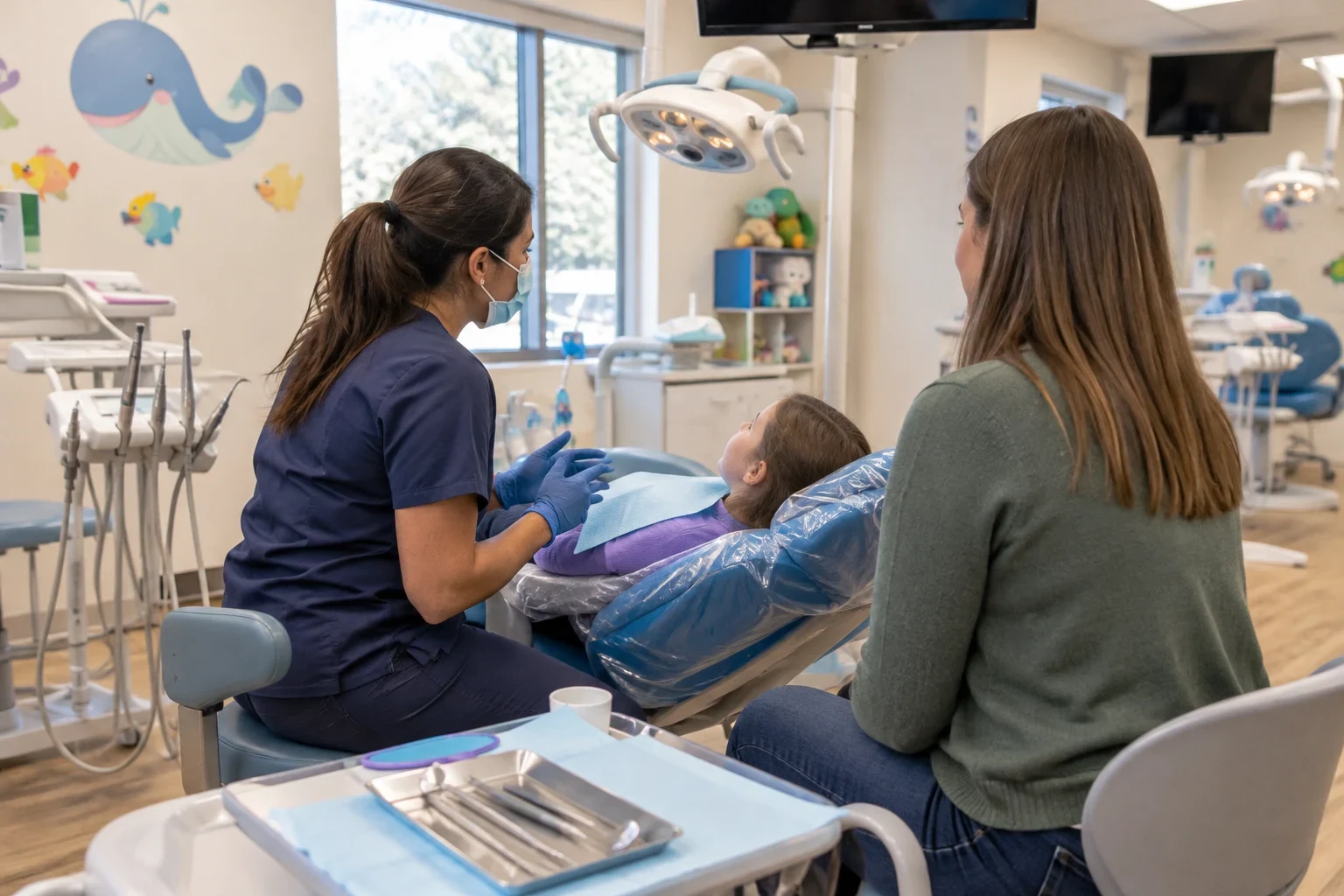
We can't give a number for a root canal until we've seen the tooth and its x-rays. Once the exam is done, we walk you through the plan and what it will cost before we begin, so nothing comes as a surprise. You can pay by MasterCard, Visa or Discover, and we take most insurance plans as well as the CareCredit Patient Payment Plan.
- Baby tooth or adult tooth
- Treating the top of the pulp in a baby tooth is a simpler job than a full root canal on a teen's permanent molar.
- Which tooth, and how many roots
- A front tooth usually has a single canal. A back molar can have three or more, and each one adds time.
- Whether a crown is needed
- Most baby molars need a crown after treatment to keep them from breaking. We list it as its own part of the plan.
- Sedation
- If your child needs help relaxing, that becomes part of the visit and the cost.
- Your insurance plan
- Plans differ a lot. We can help you read what yours lists, but the insurer decides what it pays.
Root Canal Questions from Parents
Something not covered here? (508) 501-8542
Why treat a baby tooth that will fall out anyway?
Baby teeth save room for the adult teeth underneath. Some molars are meant to stay until age 10 to 12. If one comes out too soon, the teeth beside it can shift and crowd the space. A saved tooth also lets your child chew and eat like normal.
Will it hurt?
The tooth is numb while we work, so most kids feel pressure instead of pain. Many feel better afterward than they did before, because the infected tissue is gone. A little soreness for a day or two is normal, and children's pain medicine used as directed usually takes care of it.
How long does it take?
A pulpotomy and crown on a baby tooth often get done in one visit. A root canal on a permanent tooth can run longer and sometimes needs a second appointment. We'll let you know what to plan for before the day.
Would pulling the tooth be easier?
Sometimes that is the better choice, such as when a tooth is almost ready to fall out or is too broken to save. If a back baby tooth comes out early, your child may need a space maintainer to hold the gap. We explain both options and you make the call.
Can my child go back to school after?
Most kids can, unless they had sedation. Numbness in the lip and cheek can last a few hours, and kids sometimes chew on them without noticing, so keep an eye out. Stick with soft foods until feeling comes back.
Worried About a Sore Tooth?
When a tooth is aching or just looks wrong, we'll examine it and tell you plainly what it needs and why. Parents bring their kids to us from Mansfield, Easton, Norton and other towns close by.