ServicesPediatric Crowns
Pediatric Crowns in Mansfield Center
Some teeth have too much decay or damage for a filling to hold. A small crown caps the whole tooth so your child can chew and smile without pain. We place kid-sized crowns gently, talk you both through each step and help the tooth last until it is ready to fall out.
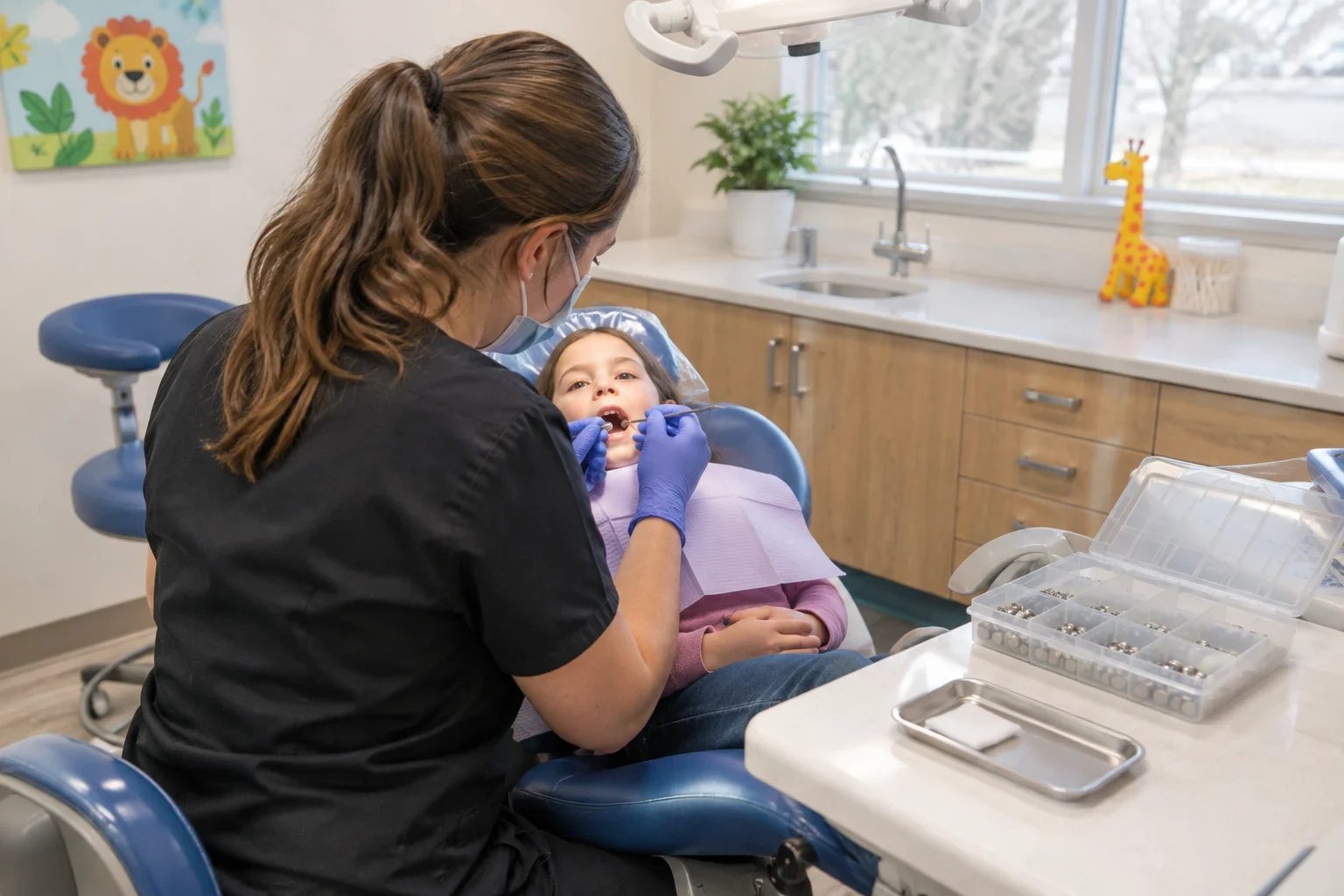
What a crown does for a child's tooth
A pediatric crown is a small cap that fits over a damaged tooth. It holds the tooth together, seals out new decay and lets your child chew on that side again. Most of the crowns we place are on baby molars, which kids need for eating and for holding space until the adult teeth come in.
Parents sometimes ask why we would bother with a tooth that will fall out anyway. Some back baby teeth stay until age 10 or 12. If one is lost early, nearby teeth can drift and crowd the adult tooth coming in underneath. A crown is often the simplest way to keep that tooth healthy and in place for those years.
We only suggest a crown when a filling will not hold. If a filling is enough, we will tell you that and move on.
What your child's crown visit includes
- Exam and X-rays first
- Before anything else, we find out how far the damage reaches. The X-rays tell us if the nerve is affected and if the tooth is worth saving.
- Stainless steel crowns
- Silver crowns do most of the heavy lifting on back baby teeth. They hold up to chewing, seldom come loose and drop out naturally along with the tooth.
- Tooth-colored options
- For a front tooth, or if you would rather have a crown that blends in, we go over white zirconia and resin crowns. They look natural, but they take a little more shaping of the tooth and a dry, still mouth to set well.
- Numbing and comfort
- Your child feels pressure but not pain once the tooth is numb. For a very nervous child or a big amount of work, we can talk about our sedation dentistry options.
- Nerve care if it is needed
- Decay that reaches the nerve may call for a small pulp treatment first, much like the work described on our Root Canals page. When we can, we do it at the same visit.
- Aftercare before you go
- We cover soft foods, keeping an eye on a numb lip and how to brush around the new crown, so you know what to do that evening.
Signs your child's tooth may need a crown
A large or deep cavity
When decay covers more than one side of a tooth, a filling has too little tooth to grip. A crown wraps the whole thing.
A broken or chipped tooth
Falls on the playground or bikes can crack a tooth. A crown protects what is left.
Pain when chewing
If your child avoids one side or complains about cold drinks, the tooth may be weak or decayed deep inside.
A filling that keeps failing
A tooth that has been refilled more than once often does better with a crown.
Weak or soft enamel
Some kids have enamel that wears or chips easily. Crowns can shield those teeth from more damage.
What affects the cost of a crown
No two teeth are the same, so we price a crown only after we have seen the tooth and its X-rays. You hear the cost from us before we start any work. Payment can be made by MasterCard, Visa or Discover, and we also work with most insurance plans and the CareCredit Patient Payment Plan.
Steel or tooth-colored
A stainless steel crown usually costs less than a white zirconia or resin crown. Insurance plans often cover the two types differently as well.
Care for the nerve
When decay has reached the nerve, the pulp treatment done before the crown adds to the total.
Number of teeth
Treating more than one tooth at a time changes the cost. It can also save your child a few trips back to the chair.
Sedation
If your child needs sedation to stay calm through the visit, it shows up as its own line on the bill.
What your plan covers
Crown coverage differs a lot from plan to plan. We can walk through what your plan lists before treatment begins.
How the crown appointment goes
- 1
A quick talk
We explain the plan to your child in simple words. You can stay nearby and ask us anything.
- 2
Getting the tooth numb
A gentle gel goes on first, followed by the local anesthetic. We give it time to take full effect before we begin.
- 3
Removing the decay
We clear out the soft, damaged part of the tooth and shape what is left so the crown sits snug. Any nerve care happens at this point.
- 4
Placing the crown
We choose the right size, check how your child bites and cement the crown on. The chair time is short for one tooth and runs longer when we treat several.
- 5
Going home
The lip and cheek stay numb for a couple of hours. Keep your child from chewing or biting them, and stick to soft food until the feeling returns.
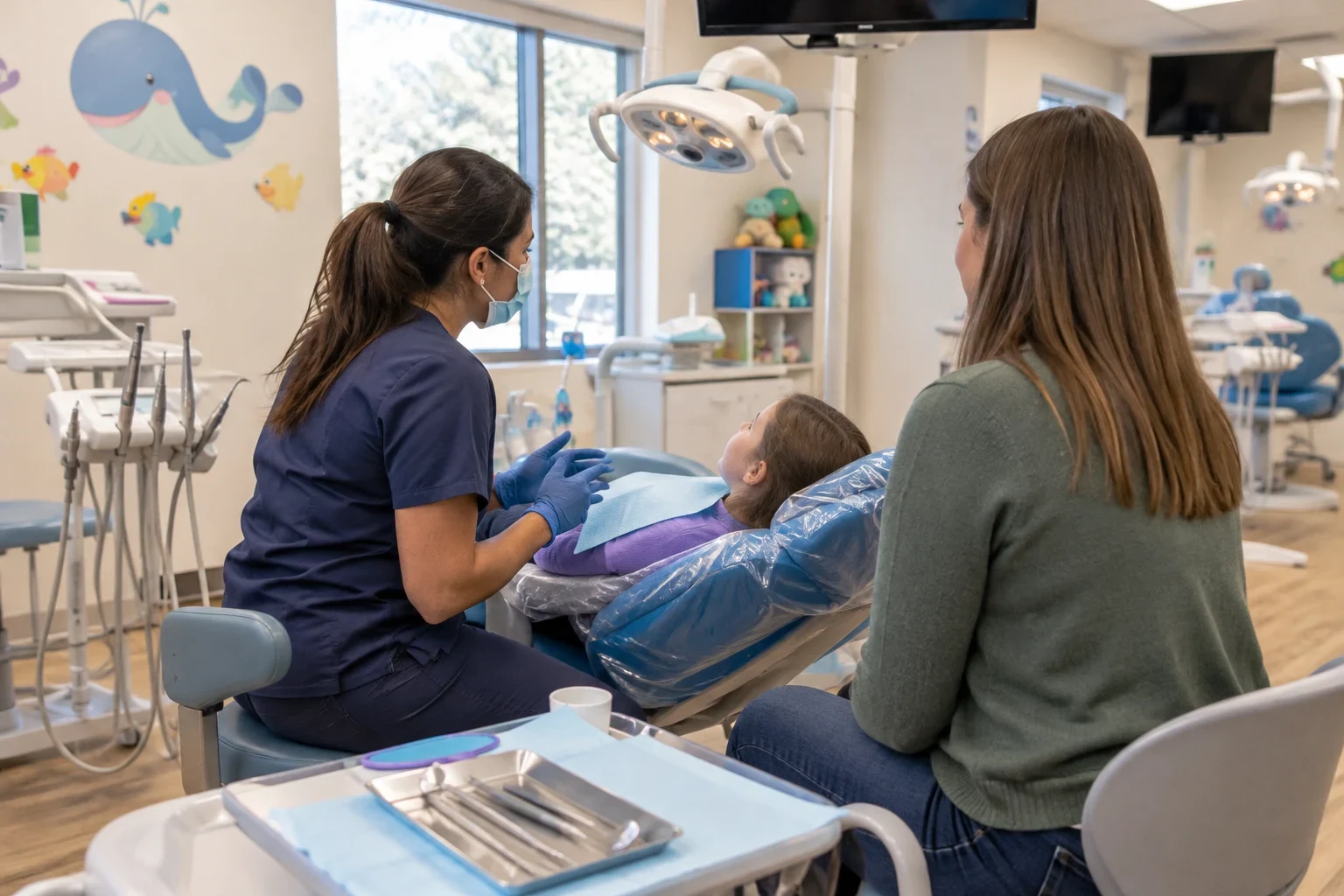
Questions parents ask about pediatric crowns
Will the crown hurt my child?
The tooth is numbed, so your child should feel pressure and some vibration, but not pain. Afterward the gums around the crown may be a little sore for a day or two. A children's pain reliever, used as the label directs, usually takes care of it.
Will a silver crown look strange?
On a back molar it is hard to see unless your child opens wide. Many kids actually like showing it off. If looks matter for a front tooth or for your family, we will talk about tooth-colored choices.
What happens to the crown when the baby tooth falls out?
It comes out with the tooth. The adult tooth grows in underneath as normal, and no extra visit is needed to remove the crown.
How long does a pediatric crown last?
A well-placed crown on a baby tooth is meant to last until that tooth falls out naturally. Kids who chew ice or hard candy can loosen one, so call us if a crown ever feels loose or comes off.
Why not just pull the tooth?
Pulling a back baby tooth early can let the other teeth shift and block the adult tooth. If pulling is the better choice, we will say so and may suggest a space maintainer to hold the gap.
How do we care for the crown?
Brush it twice a day like any other tooth and floss along the gumline. Keep up regular exams and cleanings so we can check the crown and the teeth around it.
Worried about a cracked or decayed tooth?
Bring your child in and we will check the tooth, tell you plainly what it needs and care for it the way we would for a neighbor's kid. We are glad to see new patients.