ServicesFluoride Treatment
Fluoride Treatment in Mansfield Center
We paint a thin coat of fluoride varnish on your child's teeth to help harden the enamel and slow early decay. It takes a minute or two, it doesn't hurt, and most kids are back to playing before you reach the car.
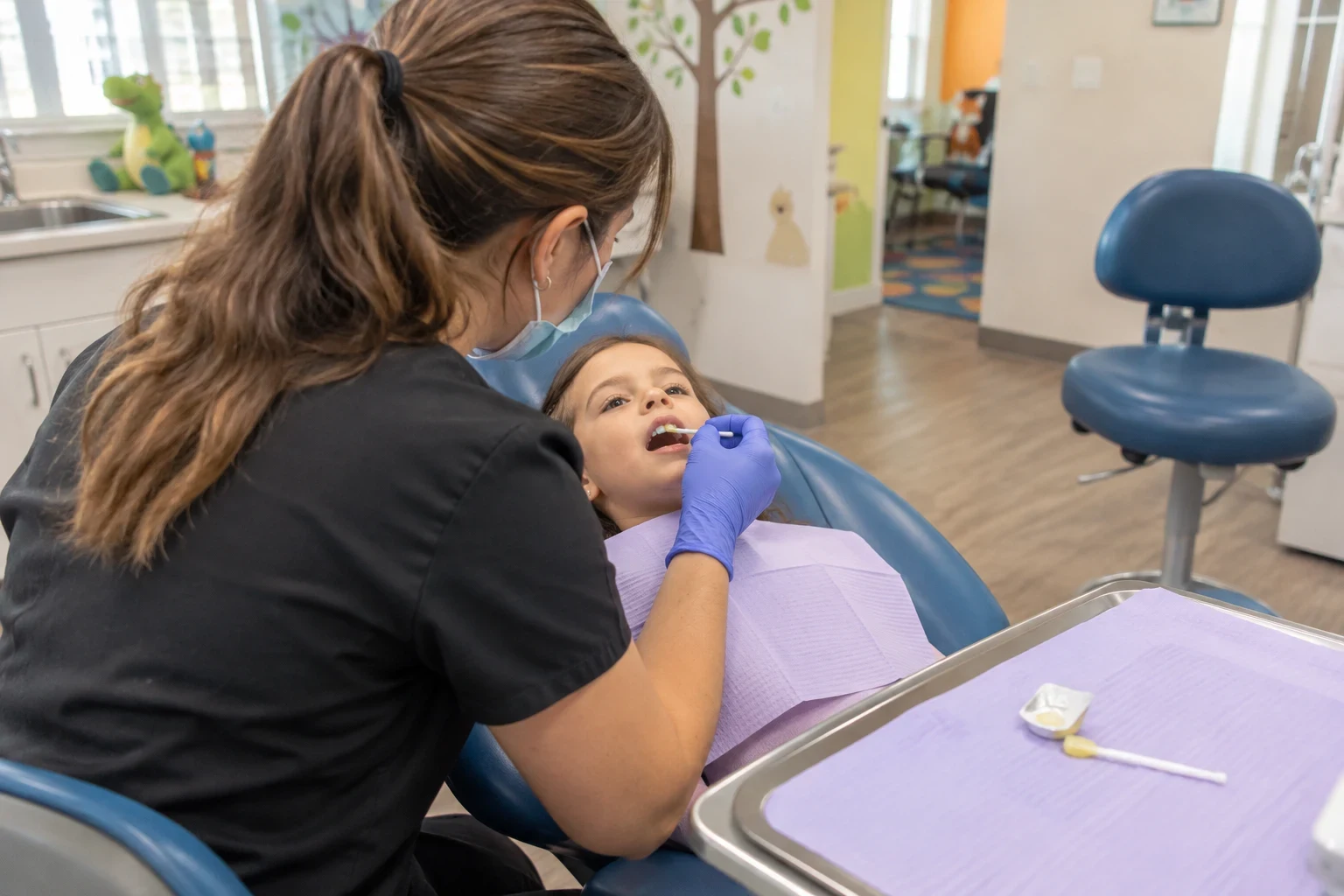
What fluoride treatment does for your child
Enamel loses minerals every time your child eats or drinks something sweet or starchy. Saliva puts some of them back. Fluoride helps that repair along and makes the enamel tougher the next time acid shows up. A small chalky white spot caught early can sometimes firm back up instead of turning into a cavity.
The varnish we use is a sticky coating that sets as soon as it touches saliva. It stays on the teeth for several hours and slowly releases fluoride. Toothpaste helps every day. The varnish gives a stronger dose a few times a year.
We don't push it on every child at every visit. We look at your child's teeth, their diet and their history, then tell you plainly whether it's worth doing and how often.
What's included in a fluoride visit
- A look at the teeth first
- We check for soft spots, white spots and plaque buildup before anything goes on. If we see something that needs more than fluoride, we tell you right then.
- Drying and painting
- We dry a few teeth at a time with gauze and brush the varnish on. No trays, no foam, no waiting with a mouthful of goop.
- A dose sized for small mouths
- Varnish uses a very small amount of fluoride. That makes it a good fit for babies and toddlers who can't spit yet.
- Clear aftercare notes
- Before you leave, we go over what your child can eat and when to brush again. You'll know exactly what to do for the rest of the day.
- An honest schedule
- Some kids need varnish every three months for a while. Others do fine twice a year. We tell you which group your child is in and why.
Signs your child could use fluoride varnish
Chalky white spots
Flat, milky patches close to the gums usually mean the enamel there has started losing minerals. Caught at that stage, fluoride can often harden them again before a hole forms.
Recent cavities
If your child has had fillings in the last year or two, their mouth is showing us it's at higher risk. Regular varnish helps protect the teeth that are still healthy.
Lots of snacking or sipping
Juice in a sippy cup, crackers through the day or sports drinks at practice keep acid on the teeth for hours. Varnish gives the enamel extra backup.
Braces or other appliances
Brackets and space maintainers trap food and make brushing harder. Kids with them tend to benefit from fluoride more often.
Well water or bottled water
If your family drinks mostly well or bottled water, your child may be getting less fluoride than you'd think. Let us know and we'll factor it in.
What goes into the price of a fluoride visit
Next to most of the care we provide, a coat of varnish is a small part of the bill. Your share comes down mainly to your insurance and to whatever else we do at the same appointment. We talk it through with you before anything goes on the teeth, so checkout holds no surprises.
Your coverage
Plenty of plans pay for fluoride for kids, but each one sets its own age cutoff and limit on visits. Some allow it twice a year, while others allow more for kids at higher risk. We're happy to go through your plan with you.
Three months or six
A child who comes in every three months will have more varnish visits in a year than one who comes twice a year. We recommend the shorter schedule only when your child's teeth show a real need.
Other care that same day
Varnish usually goes on right after an exam and cleaning. Sealants or a filling done at that visit show up as their own lines on the bill.
Paying for it
We accept MasterCard, Visa, Discover, most insurance plans and CareCredit Patient Payment Plan. Mention the one that suits your family when you call, and we'll note it on your child's file.
How the appointment goes
- 1
We get to know your child
For a first visit, we take a few minutes to say hello and show your child the tools. Little ones can sit in your lap. Nobody gets rushed into the chair.
- 2
Quick check and clean
Fluoride usually goes on right after an exam and cleaning, so the teeth are clear of plaque. If your child is already due for exams and cleanings, we do both in one trip.
- 3
Varnish goes on
We paint each tooth with a small brush. It tastes mildly sweet or fruity and feels a little sticky. The whole step takes a couple of minutes.
- 4
Back to the day
Water is fine right away, and mushy foods like yogurt or pasta are okay a little later. For the rest of the day, steer clear of chips, gummies, nuts and hot soup or cocoa. Hold off on brushing until the next morning, or until the time we write down for you.
Questions parents ask about fluoride
Is fluoride varnish safe for my baby?
Yes, varnish is made for small kids. It uses a tiny amount, and it sets on the tooth instead of being swallowed in a big dose. That's why we can use it as soon as the first teeth come in.
Why are my child's teeth yellow after the treatment?
Some varnishes leave a faint yellow or cloudy film. It's just the coating sitting on the teeth. It brushes off the next time your child brushes, and the teeth look normal again.
How long after varnish can my child eat?
Soft foods and cool drinks are fine shortly after. Skip hard, crunchy, sticky or hot foods for the rest of the day so the varnish stays put. We'll give you the exact timing before you leave.
We already use fluoride toothpaste. Does my child still need this?
Toothpaste does a lot of the daily work, and you should keep using it. Varnish is a stronger dose that stays on longer. For kids with low cavity risk, we may say toothpaste alone is enough, and we'll tell you so.
Does fluoride replace sealants?
No, each one handles a different part of the tooth. Fluoride toughens enamel all over. A sealant is a thin shield over the pits and fissures on the chewing side of molars, spots a toothbrush bristle is too wide to clean. Plenty of kids get both, and our Sealants page explains that side of it.
What if my child won't sit still?
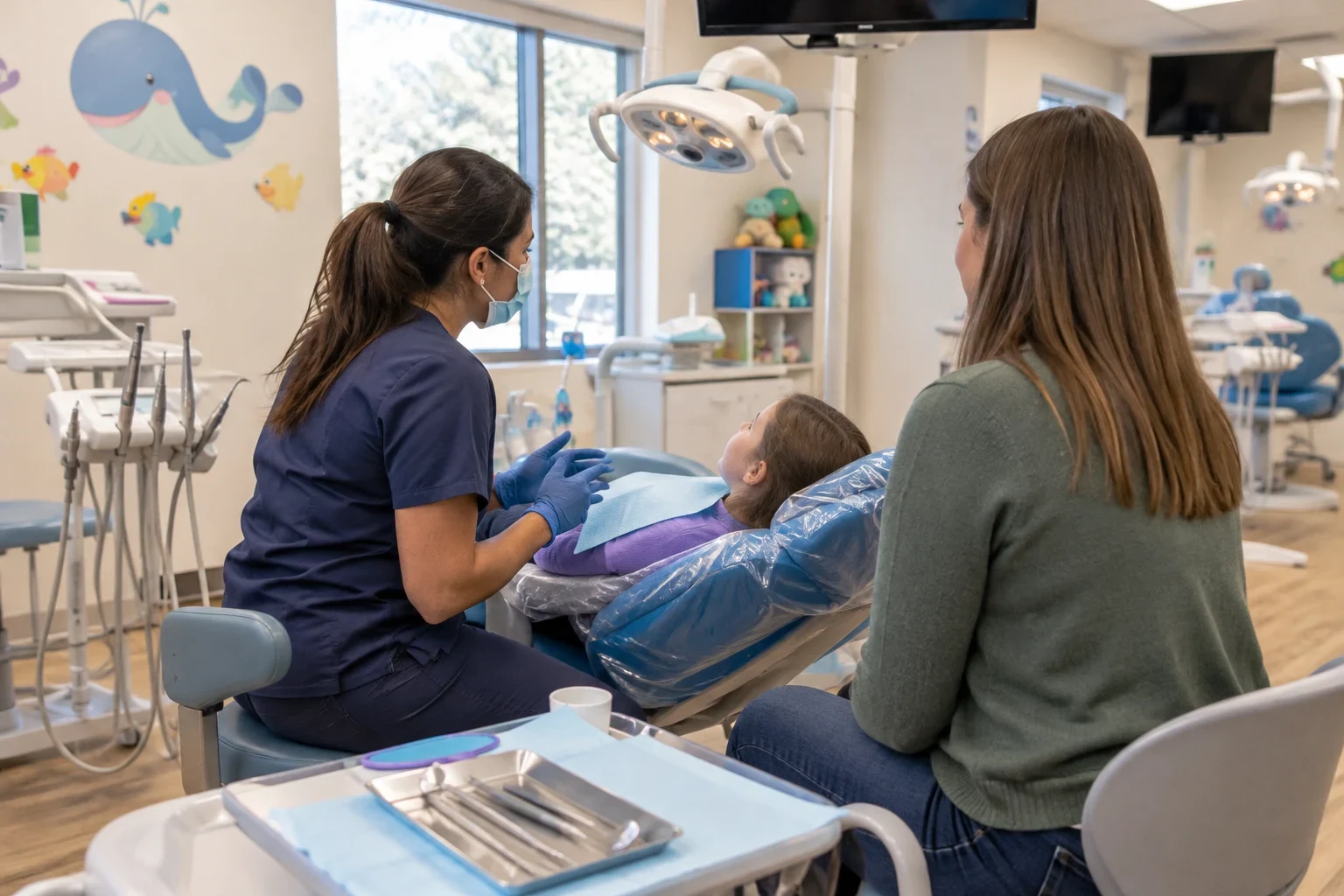
That's normal, and we work fast. Toddlers can stay in your lap while we paint the teeth. Even a wiggly child is usually done in a minute or two.
Ready to set up your child's next visit
We see kids from Mansfield Center and nearby towns like Easton, Norton and Foxborough. Give us a ring and we'll find a time that works for your family, and get new patients registered while you're on the line.