ServicesFillings
Fillings for Kids in Mansfield Center
A cavity is common, and it is fixable. We clean out the soft spot, fill it with a strong material and send your child home with a working tooth. We go slow, tell kids what each tool does and keep parents in the loop.
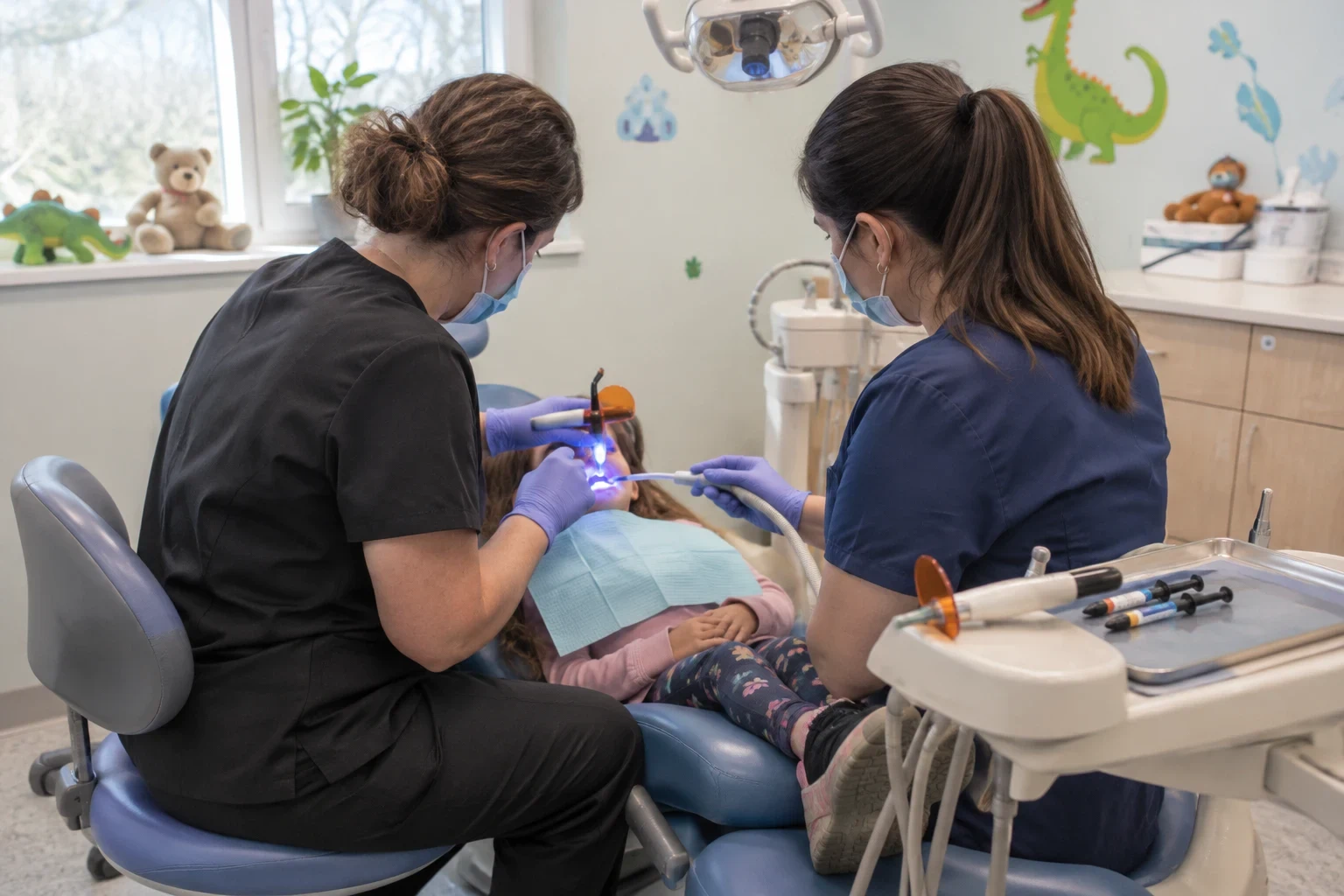
What a filling does for your child
A cavity is a hole that decay makes in the hard outer layer of a tooth. It will not heal on its own. Left alone, it grows toward the nerve, and a small fix turns into a bigger one, like a pediatric crown or a root canal.
A filling stops that. We remove the decayed part, clean the tooth and seal the space with a filling material that bonds to what is left. Caught early, most cavities need only a small filling and a short visit.
We treat every child like the kid next door. That means no rushing, no scare talk and a straight answer about whether a tooth really needs work right now.
What your child's filling visit includes
A look and an X-ray first
We check the tooth and take an X-ray when it helps us see how far the cavity reaches. Decay often hides between teeth where nobody can spot it.
Numbing done gently
A numbing gel goes on first, so the shot is barely noticed. Most kids feel some pressure and maybe a tickle.
Clearing out the decay
We take away the decayed spot and leave the healthy part of the tooth alone. A smaller filling tends to hold up better in a small mouth.
A filling matched to the tooth
We choose the material based on the tooth, how big the cavity is and how long the tooth will be around. You hear what we are using and why.
Bite check and polish
We shape the filling so your child bites down like normal. Then we smooth it so the tongue does not find a rough edge.
Clear aftercare notes
Before you head out, we tell you when your child can eat and what to keep an eye on. Short and simple.
Signs your child may have a cavity
- Wincing at cold or sweet foods
- If ice cream or juice makes your child flinch, a cavity may have reached the softer layer under the enamel.
- White, brown or dark spots
- Chalky white spots can be early decay. Brown or black spots, especially in the grooves of back teeth, often mean a cavity has formed.
- Chewing on one side
- Kids rarely say a tooth hurts. Many just quietly avoid chewing on that side.
- Food getting stuck in one spot
- A small hole catches food. If floss keeps snagging or shredding in the same place, let us take a look.
- A cavity found at a checkup
- Often there are no signs at all. That is why regular exams and cleanings catch so many cavities while they are still small.
How the appointment goes
- 1
We say hello and explain
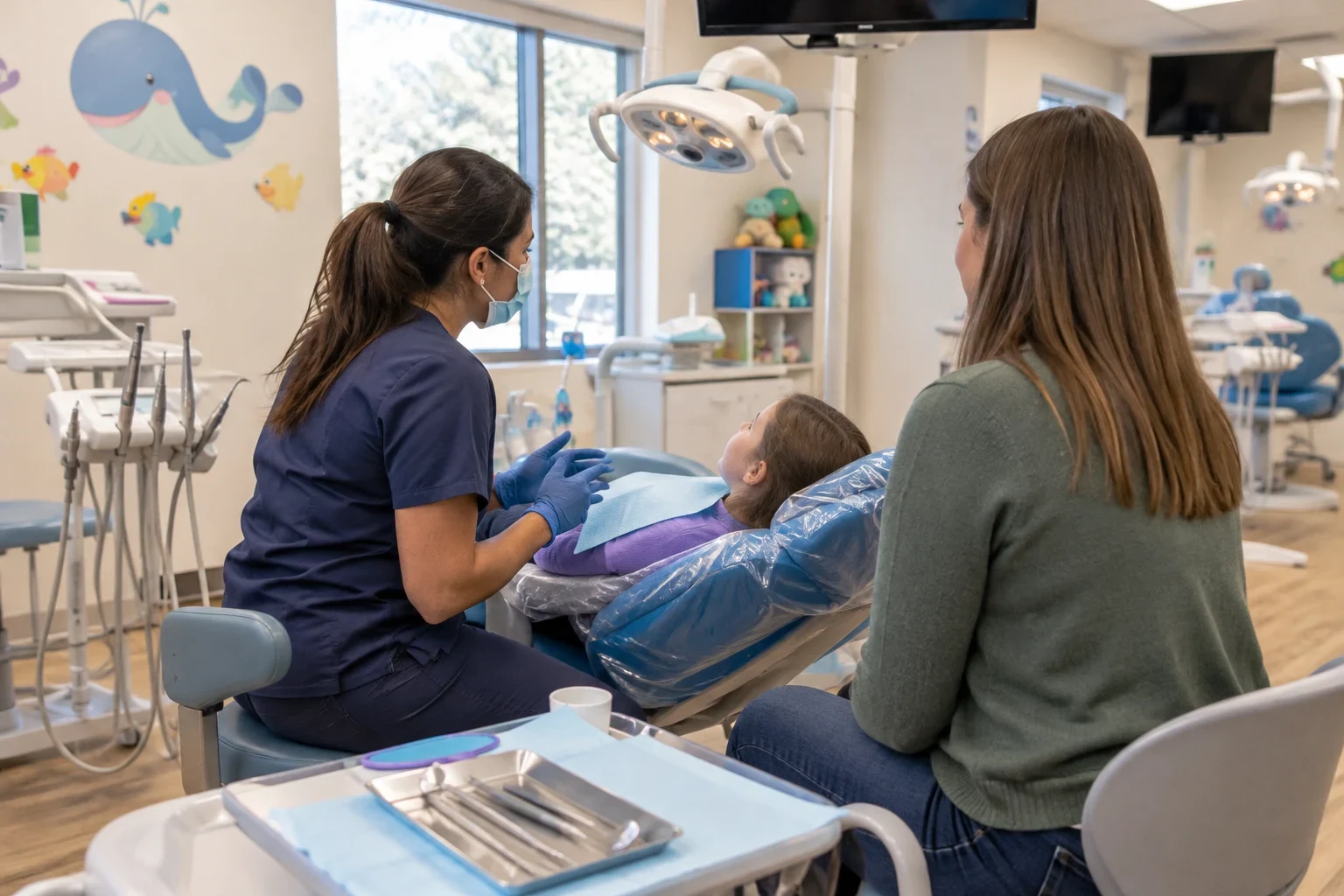
We show your child the tools and use kid-friendly words for each one. Parents can ask anything before we start.
- 2
We numb the tooth
Gel first, then a slow, small shot. We wait until the tooth is fully numb before doing any work.
- 3
We fix the tooth
We remove the decay, clean the space and place the filling. A single small filling is often done in well under an hour.
- 4
We check the bite and send you home
Your child bites on a thin paper so we can adjust any high spot. We go over aftercare and set the next checkup if one is due.
What affects the cost of a filling
Every cavity is a little different, so we do not name a price until we have looked at the tooth. After the exam, we walk you through the work and the cost before anything starts. For payment, Visa, Discover and MasterCard all work here, and so do most insurance plans. Some families prefer to use the CareCredit Patient Payment Plan instead.
- Size and depth of the cavity
- Decay caught early on a single surface is a quicker fix with less material. When it has spread across two or three sides of the tooth, the work takes longer.
- How many teeth need work
- If your child is comfortable, we can often treat several teeth in one sitting. The total goes up, but you make fewer trips.
- The filling material
- Materials are not all priced the same. We go over the choices that suit the tooth and your child's age.
- Extra comfort help
- Some kids need more help to relax, especially a nervous child or a visit with several fillings. Sedation dentistry is an added part of the visit when it is used.
- Your insurance plan
- Plans cover fillings in different ways. Have your card handy, and we will go over what your plan lists so you know where you stand.
Questions parents ask about fillings
- Baby teeth fall out. Is a filling really worth it?
- Back baby molars often hang on until the preteen years. In that time a cavity can cause pain, spread to the tooth next door or turn into an infection. Those baby teeth also save room for the adult teeth underneath. A small filling now is usually the simplest fix.
- Will the filling hurt my child?
- We make sure the tooth is fully numb first, so most kids feel some pressure and nothing sharp. A numbing gel goes on before the shot to take the sting out. The spot may feel a bit tender for a day, then it settles.
- When can my child eat after a filling?
- Hold off until the numb feeling is gone, which is often a couple of hours. Before then, kids can chew on a cheek or lip and not know it. Stick with soft foods for the rest of the day.
- My child is very nervous. What can you do?
- We take our time and tell your child what is coming in simple words. That alone works for a lot of anxious kids. If there are several cavities or the fear runs deep, sedation dentistry may suit your child better, and we talk it over with you before deciding.
- How do we keep from needing more fillings?
- Brush twice a day with fluoride toothpaste and floss where teeth touch. Go easy on sticky snacks and all-day juice sipping. Sealants and fluoride treatment give extra cover to the back teeth that tend to get cavities first.
Get that cavity taken care of
A small cavity is a short visit. Wait too long and it turns into a bigger job. Pick up the phone and we will set a day and hour that fit around school and practice.